Antioch's Dark History Part 2
Continued, "The Bay Area town that drove out its Chinese residents for nearly 100 years"
A crowd of onlookers and the local fire brigade looked on as flames engulfed homes and buildings. “Very little was done to stay the progress of the fire,” a wire report noted, although crews must have gone into action at some point to prevent white homes and businesses from being damaged. "The Caucasian torch," wrote the Bee, "lighted the way of the heathen out of the wilderness."
By morning, all but two of Chinatown’s buildings were razed. The news was met with enthusiasm throughout the state.
"The actions of the citizens of this place will, without doubt, meet with the hearty approval of every man, woman and child on the Pacific coast," the Chronicle cheered, "and will go a long ways toward convincing the people of the Eastern States that the Chinese nuisance on our seaboard has assumed such vast proportions that it is beyond the pale of political issues and has come to be a disgrace that must be wiped out."
A few newspapers cautioned that legislation, not arson, was the preferred way to eliminate Chinese people from their communities. The only prominent voice against the Antioch violence was San Francisco’s famed Emperor Norton, although his grievance was also colored by economic concerns.
"The Antioch riot is a disgrace to Americans," he wrote in an Oakland Tribune op-ed. "Now, therefore, We, Norton I., Dia Gracias Emperor, do hereby command the Grand Jury of Contra Costa County to indict the anti-Chinese leaders and have them brought to justice, and thereby protect the Americans and other foreigners and commerce in China."
For their part, the citizens of Antioch were largely unrepentant. The Antioch Ledger blamed the Chinese residents for the arson attack, writing, "had the women not returned, the property would have remained intact." A few days later, they lied again.
“A large number of Chinamen quietly pursue their avocations in our midst, unmolested,” they wrote. “No Chinaman has ever been interfered with."
The events of 1876 had a century of ramifications for the demographics of Antioch. Although some Chinese people did eventually return to do business in the area, almost none felt safe permanently settling there again. Nearly 100 years later, the 1960 census recorded a little over 17,000 people living in the town; 99.6% were white. Just 12 residents were Chinese.
That finally began to change, however, in the '80s and '90s as Antioch’s population boomed. The Contra Costa County town, ideal for commuters who couldn’t afford San Francisco real estate prices, grew and changed. Sixty-two thousand people lived there in 1990 and 3,043 identified as AAPI.
The 2010 census showed white people had become the minority for the first time; 10% of the population is Asian American.
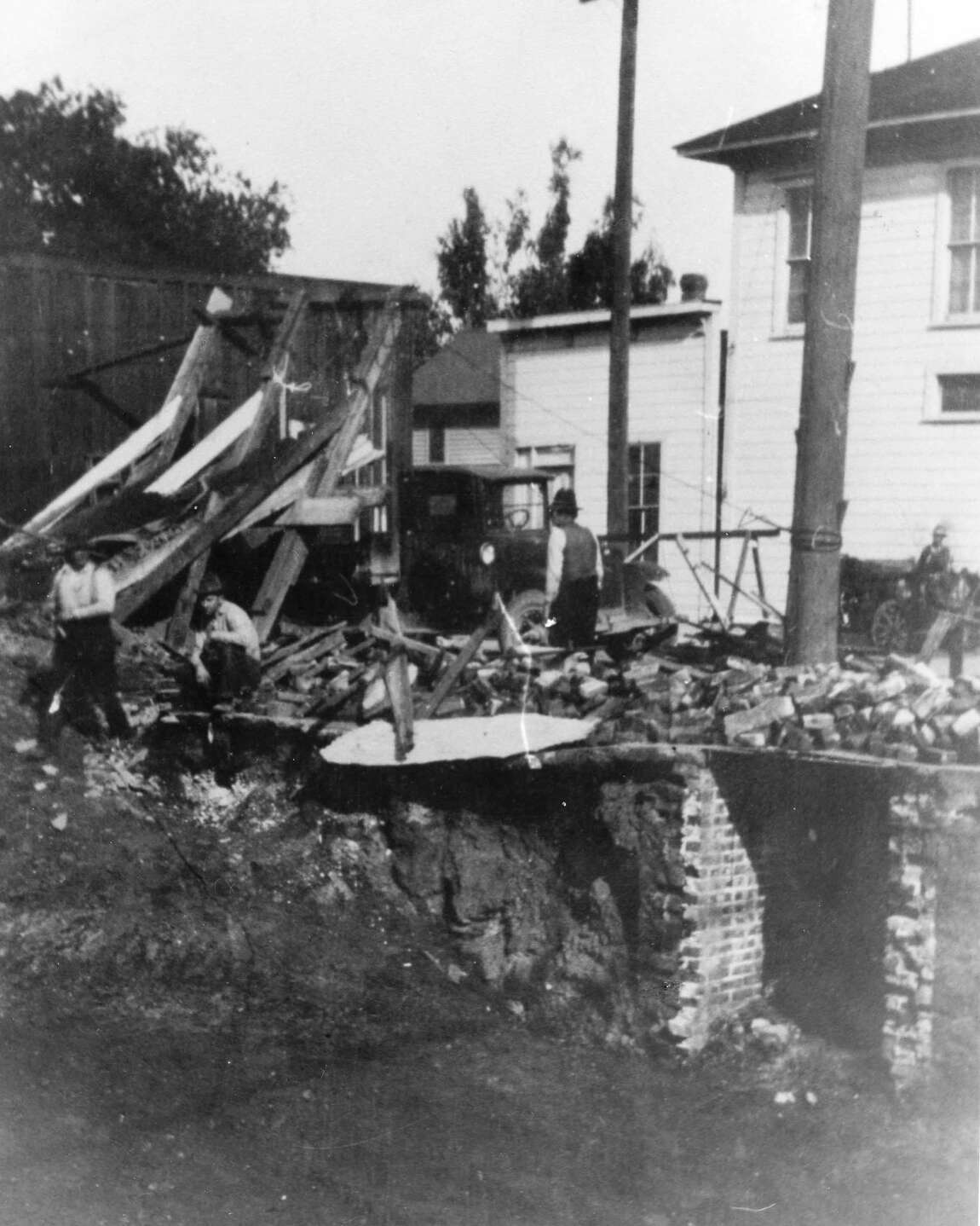
Below the waterfront part of town, some of the tunnels were occasionally resurfaced by construction work. They were remarkably sturdy with entrances framed in brick. During Prohibition, they were supposedly used by rum runners.
They were built, it seems, for centuries of use.
Back to Part 1
Back to Antioch Social Justice
"The Bigger Picture"